
Stand mixer or hand mixer: an honest comparison

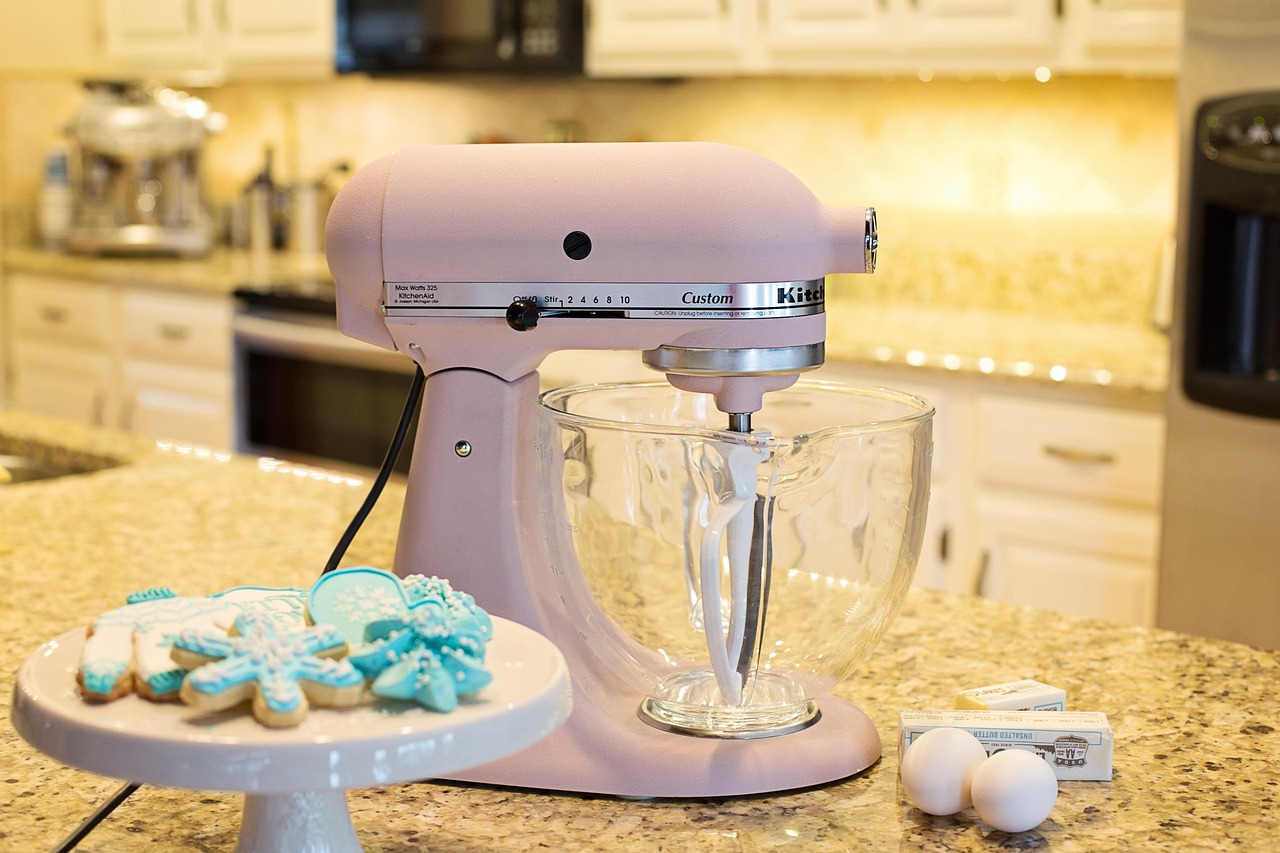
The stand mixer is the aspirational appliance of the modern kitchen. It is also, for a great many households, the appliance that spends fifty-one weeks of the year on a shelf being dusted.
This is not an argument against owning one. It is an argument for being honest about what you bake before spending the money and the worktop.
What a hand mixer does perfectly well
Creaming butter and sugar. Whipping cream. Beating egg whites to soft or stiff peaks. Cake batters, brownie mixes, meringue, mashed potato, pancake batter, whipped icing. That is the overwhelming majority of domestic baking, and a hand mixer with a decent motor does all of it without complaint.
It also costs a fraction as much, fits in a drawer, washes in thirty seconds, and can be used in any bowl, any pan, and directly in the pot.
Where a hand mixer genuinely struggles
Bread and enriched dough
Kneading is sustained heavy load, and hand mixers are not built for it. Dough hooks on a hand mixer will manage a small soft dough and will stall, overheat and eventually burn out on a stiff one. If you bake bread more than occasionally, this is the argument for a stand mixer and it is a good one.
Long mixes
Italian meringue, seven-minute frosting, anything requiring ten unbroken minutes of beating. Physically holding a hand mixer for that is unpleasant, and the motor is running near continuously in a housing designed for short bursts.
Volume
Double batches. A hand mixer in a large bowl throws flour around the kitchen; a stand mixer with a shield does not.
Reading a stand mixer specification
Bowl capacity
Quoted in quarts, and like every capacity figure it is the empty volume. A 3.2-quart bowl handles a standard single-batch cake comfortably and struggles with a double batch. A 5-quart bowl is the domestic standard. Above that you are buying for a genuinely large household or a side business.
Motor rating
More relevant here than on a blender, because kneading is a sustained load rather than a burst. Where a manufacturer quotes both, the continuous figure is the one that matters.
Tilt-head or bowl-lift
Tilt-head models are lighter, cheaper and easier to get the beater in and out of. Bowl-lift models are more stable under heavy dough and take more height — including height under your wall cabinets, which is the specification most people forget to check.
Attachments
Three come as standard on almost every model: a flat beater, a whisk and a dough hook. Everything else — pasta rollers, grinders, spiralisers — is sold separately and is genuinely useful only if you were going to buy that appliance anyway.
The weight question
A stand mixer weighs somewhere between five and twelve kilograms. If it lives on the worktop, that is irrelevant. If it lives in a low cupboard, it is the single factor most likely to stop you using it. Be realistic about which of those two is true in your kitchen before choosing a size.
Compact stand mixers
A middle option that gets overlooked: small stand mixers in the 3 to 3.5 quart range, considerably lighter and shorter than a full-size machine. They will not knead a large bread dough, but they will hold a bowl steady for a ten-minute meringue and they fit under a standard wall cabinet. For a household that bakes cakes rather than bread, they are frequently the right answer.
A decision in three questions
- Do you make bread or enriched dough more than a few times a year? If yes, stand mixer, and prioritise the motor and the bowl-lift design.
- Do you bake cakes and desserts regularly but not bread? A compact stand mixer or a good hand mixer will both serve. Choose on worktop space.
- Do you bake occasionally? Hand mixer. Spend the difference on decent bakeware, which will affect the results more.
Looking after either
- Check beater-to-bowl clearance on a stand mixer once or twice a year; most have an adjustment screw and most drift.
- Never run a mixer with the head unlocked, and never lift a hand mixer out of a mixture while it is running.
- Wash beaters immediately. Dried batter in a beater’s wire crossing is a genuinely irritating thing to remove.
- Keep the motor vents clear of flour.
What we stock
The outlet carries both, and the listings state bowl capacity, motor rating, weight and external height so the comparison can be made before ordering. If you are between two models and want to know which one fits under a fourteen-inch cabinet gap, the El Cajon counter can measure the carton and tell you.
Common questions
Can a hand mixer knead bread dough?
A small, soft dough, briefly. A stiff or enriched dough will stall it, overheat the motor and eventually burn it out. Kneading is sustained heavy load, which is precisely what hand mixers are not built for.
What size stand mixer bowl do I need?
Five quarts covers almost every domestic recipe with room to work. Three quarts handles a standard single-batch cake and struggles with a double batch. Larger than five is for genuinely large households.
Why does my mixer leave unmixed batter at the bottom?
The beater-to-bowl clearance has drifted. Most stand mixers have an adjustment screw; the beater should almost touch the base without striking it. It takes two minutes to correct.
Browse the range: all products · about Falcon Appliances · ask us a question.