
The sharpener built into your knife block: help or harm?

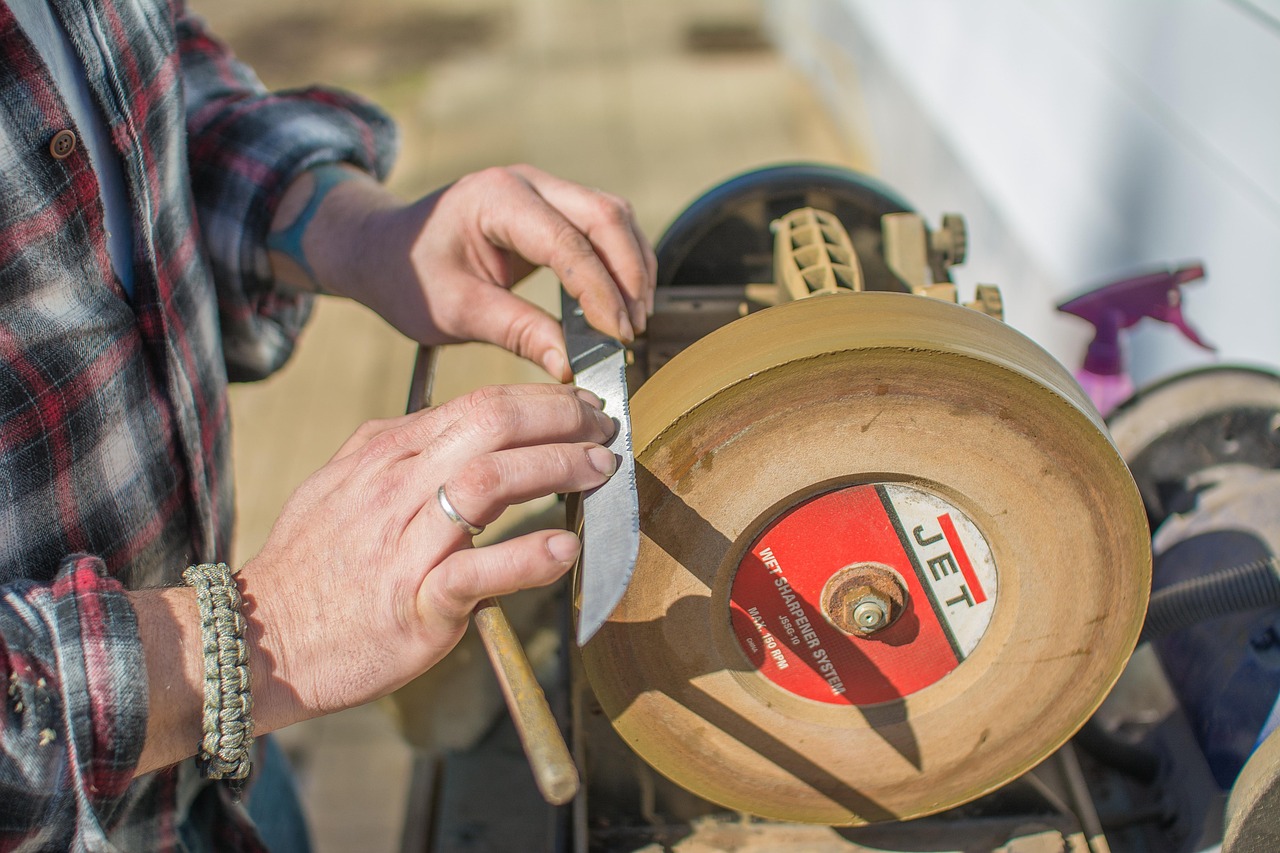
Most knife blocks sold today have a slot in the top with a pair of carbide or ceramic wheels in it. Pull a knife through, and it cuts better. There is a persistent view among people who care about knives that this device is vandalism, and a persistent view among people who cook that it is the most useful thing on the block.
Both are right, about different knives.
Honing and sharpening are different operations
A knife edge is a very thin piece of steel. In use it does not primarily wear away — it rolls over to one side. A knife that feels blunt is usually a knife whose edge is bent.
Honing straightens that rolled edge. A steel rod, a ceramic rod, or the fine slot of a pull-through does this. It removes almost no metal and restores most of the performance, and it can be done every few uses.
Sharpening removes metal to form a new edge, and it is only needed when honing stops working — for a household knife, perhaps once or twice a year.
Most people sharpen when they should be honing, which is why knives wear out faster than they should.
What a built-in pull-through does
Carbide wheels are set at a fixed angle, usually around twenty degrees per side, and they scrape metal off aggressively. In one or two pulls they will put a working edge on a badly blunt knife with no skill required. That is a real benefit and it should not be dismissed.
The costs are equally real. The angle is fixed, so if your knife was ground at a different angle the sharpener re-grinds it to its own. It removes considerably more metal than a stone would for the same result, and it leaves a coarser edge than a whetstone. Over years, a knife sharpened this way visibly loses blade height.
Which knives should go near one
Yes
Everyday stainless kitchen knives that came as part of a set. Softer steel, twenty-degree grind, replaced eventually anyway. The pull-through matches how these knives were made and how they will be used, and the alternative is a drawer full of blunt knives.
No
Japanese knives, anything with a hard high-carbon steel, anything ground at fifteen degrees per side, and anything expensive. A carbide wheel will re-grind an asymmetric or fine edge into a coarse Western one, and on hard steel it can chip the edge outright.
Never
Serrated knives. The wheels flatten the scallops and destroy the blade. Serrated edges are sharpened with a tapered rod, one scallop at a time, or not at all — most bread knives are simply replaced.
Using one properly
- Light pressure. The wheels do the work; pressing harder removes more metal and produces a worse edge.
- Two or three pulls, then test. Repeated pulling is where blade height goes.
- Pull straight, heel to tip, at a steady speed.
- If the block has a coarse and a fine slot, use the coarse one rarely and the fine one often.
- Wipe the blade afterwards — the swarf is fine metal dust.
The better routine, if you are willing
Hone with a steel or ceramic rod every few uses; it takes fifteen seconds and it will keep a knife performing for months. Sharpen on a whetstone once or twice a year, or send the knives out to be sharpened, which many hardware shops still offer.
A guided sharpening system sits between the two: it holds the angle for you and uses abrasive stones rather than carbide wheels, so it removes less metal and produces a finer edge. It takes a few minutes rather than a few seconds.
Testing sharpness honestly
The paper test is the practical one: hold a sheet of printer paper by one corner and slice down through it. A sharp knife glides; a blunt one tears or slips. Do this before and after sharpening, and you will quickly learn how little work most knives actually need.
The short version
The sharpener in the block is a good tool for the knives that come with the block. Keep your better knives away from it, hone more and sharpen less, and stop putting anything with teeth anywhere near it.
The knife sets we carry at the El Cajon outlet list the blade steel and whether the block includes a sharpener, so you can decide in advance which of your knives are going through it.
Common questions
Will the block sharpener ruin my knives?
It will not ruin the everyday stainless knives that came with the block — it matches how they were ground. Keep hard-steel, Japanese and expensive knives away from it, and never put a serrated blade through one.
How do I know when a knife needs sharpening rather than honing?
Try honing first with a steel or ceramic rod. If the knife still tears paper rather than slicing it cleanly, the edge is genuinely worn and needs metal removed.
Can serrated bread knives be sharpened?
Only with a tapered rod, one scallop at a time, and it is slow work. Most people replace bread knives instead, which is a reasonable decision.
Browse the range: all products · about Falcon Appliances · ask us a question.